Low pH is one of the few well water problems that does damage while you are not looking. It does not smell, it does not stain the laundry, and it will not stop you drinking the water. It just slowly eats your plumbing.
The stain that gives it away
Blue-green staining in sinks, tubs and around fixtures is the classic sign. That colour is copper, and it is coming out of your own pipes rather than out of the ground.
That is the part worth sitting with. Acidic water is corrosive, and what it corrodes is the plumbing between the well and your tap. Along with copper, it can pull other metals into the water, which is why pH is not purely a plumbing question.
The number
Below about 6.5, pH correction is usually the right call. Acidic groundwater is common across North Carolina, so this comes up constantly on the well side of our work and almost never on the city side.
Your test gives us the reading. It is not a judgement call.
Why it comes first
Acidic water is hard on treatment equipment too, not just plumbing. Putting a softener or an iron system in ahead of a pH problem means the new equipment spends its life in the same corrosive water that damaged the old plumbing.
So when a well tests acidic alongside other issues, pH correction generally goes first in the chain, and everything else sits downstream of it.
How a calcite neutralizer works
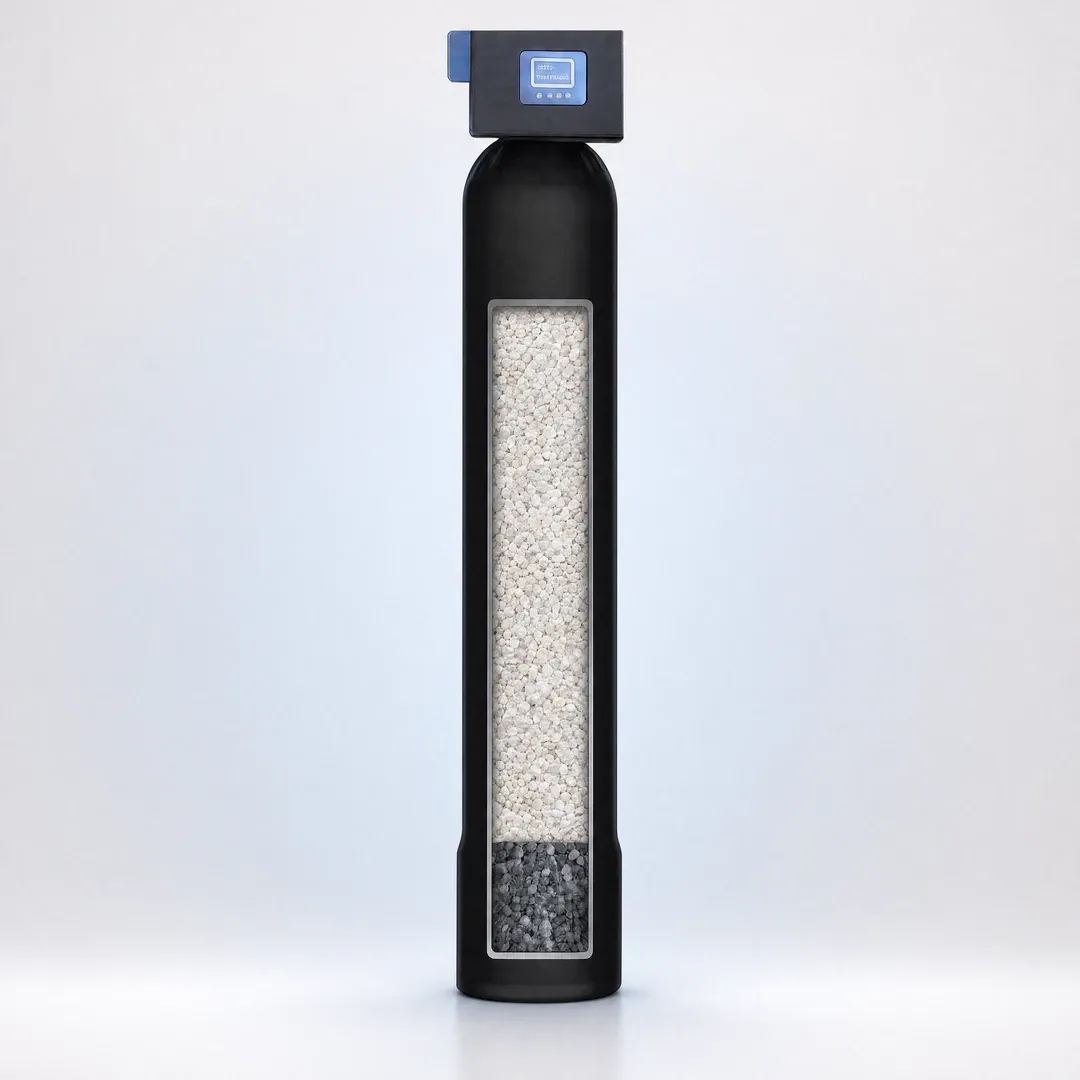
There is no chemical injection and nothing to dose. The tank holds crushed calcium carbonate, which is natural white marble media. As acidic water passes through, it dissolves a small amount of the calcite, and that raises the pH toward neutral.
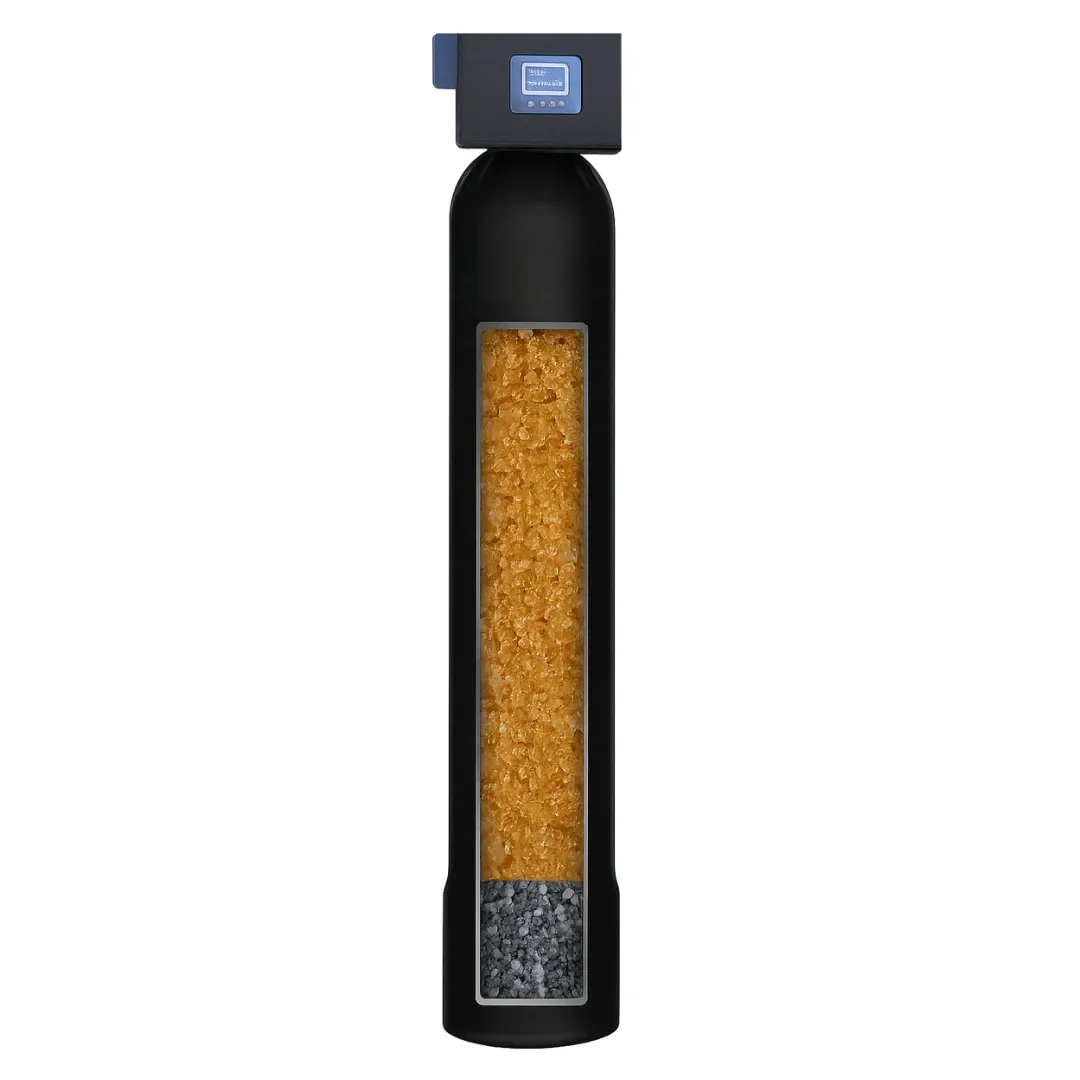
The bed backwashes periodically so it stays evenly packed and keeps flowing properly. Because the calcite is consumed as it works, it needs topping up over time. That is the one piece of ongoing attention it asks for.
The trade-off nobody mentions
Calcite adds calcium to the water. Calcium is hardness.
So correcting pH can raise your hardness reading, and a softener downstream is often the sensible companion rather than an upsell. We would rather tell you that before you buy than have you discover it afterwards.
Whether you actually need one depends on where your hardness lands after the neutralizer, which is something we work out from your test rather than assume.
What to do next
If you are seeing blue-green staining, or you already have a pH reading below 6.5 from a lab, that is enough to start the conversation.
The in-home test is free and takes about fifteen minutes. It gives us pH, hardness, iron and the rest in one visit, which is what a sensible treatment order actually depends on.