Newer homes, simpler problems
Recent construction takes lead service lines and pre-1986 solder largely off the table. What is left is what treatment cannot fix: taste, smell and what you would rather not drink.
Holly Springs has grown fast, and the housing stock shows it. Most of what we see here is newer construction on municipal supply, which narrows the water conversation to taste, smell and drinking water.
The town sits in southwestern Wake County, close enough to Chatham and Harnett that private wells appear on the outskirts. Those properties are a different build entirely.
We test before we quote here rather than assuming, because southwestern Wake is a genuine mix.
On municipal supply, the Triangle pattern holds: surface water treatment means chlorine, and chlorine means taste and smell at the tap. Carbon filtration is the answer, and municipal supply across the metro generally runs soft to moderately hard, so softening is a want rather than a need for many households.
On a private well, expect the Piedmont pattern instead: iron, hydrogen sulfide, sediment and sometimes low pH.
We confirm your supplier and your source water during the free test rather than assuming it from your address.
Recent construction takes lead service lines and pre-1986 solder largely off the table. What is left is what treatment cannot fix: taste, smell and what you would rather not drink.
Triangle municipal water is not especially hard. If someone quotes you a softener without showing you a grain reading, ask for the number first.
Toward Chatham and Harnett, private wells become common and the whole equipment list changes. The free test is how we find out which conversation we are having.
Systems that suit Holly Springs
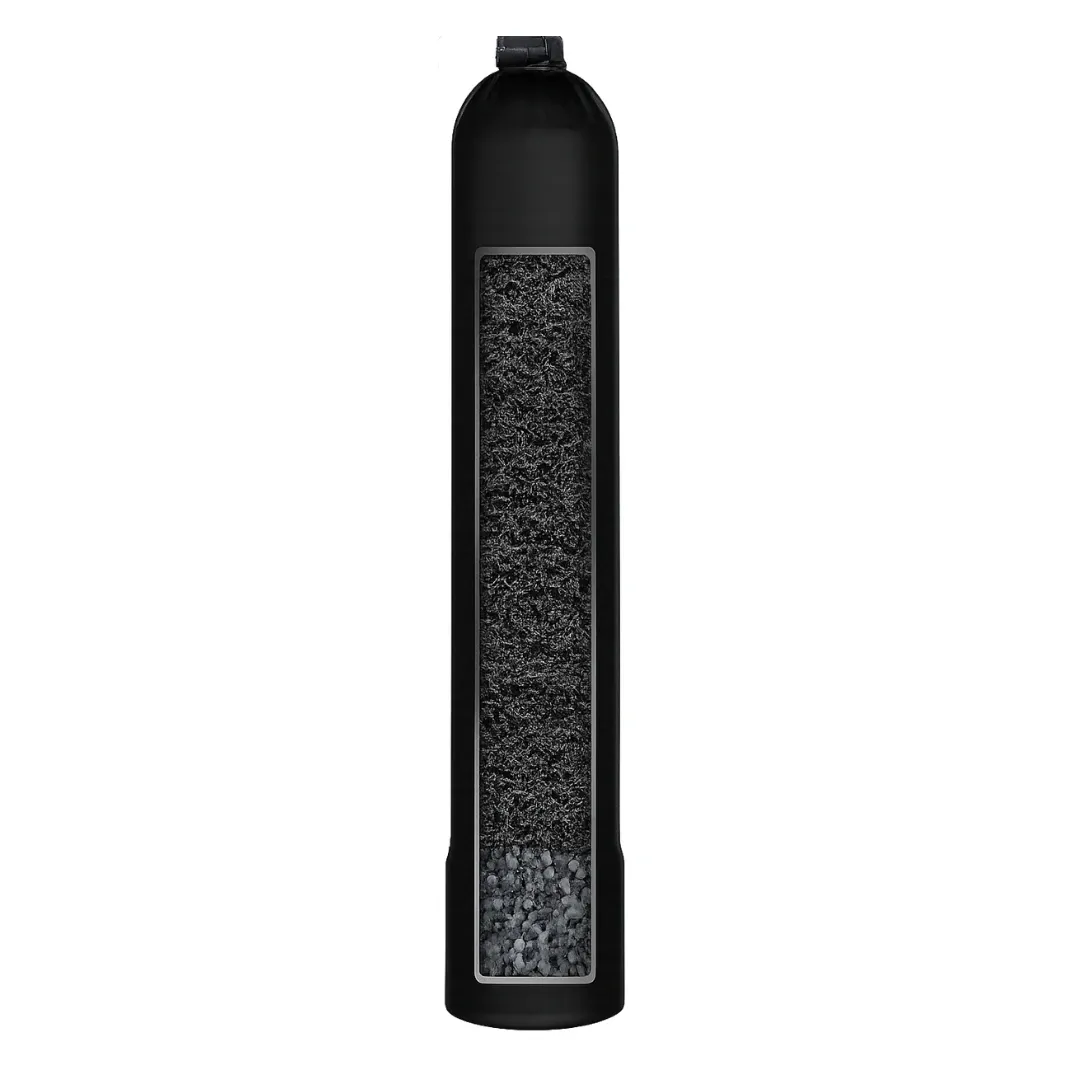
Removes chlorine, chloramine, taste and odor — no salt, no valve, no electricity. Does not soften.
Regular price$3,614Sale price$2,349
Installed
35% off — ends September 30, 2026
Free reverse osmosis drinking system included
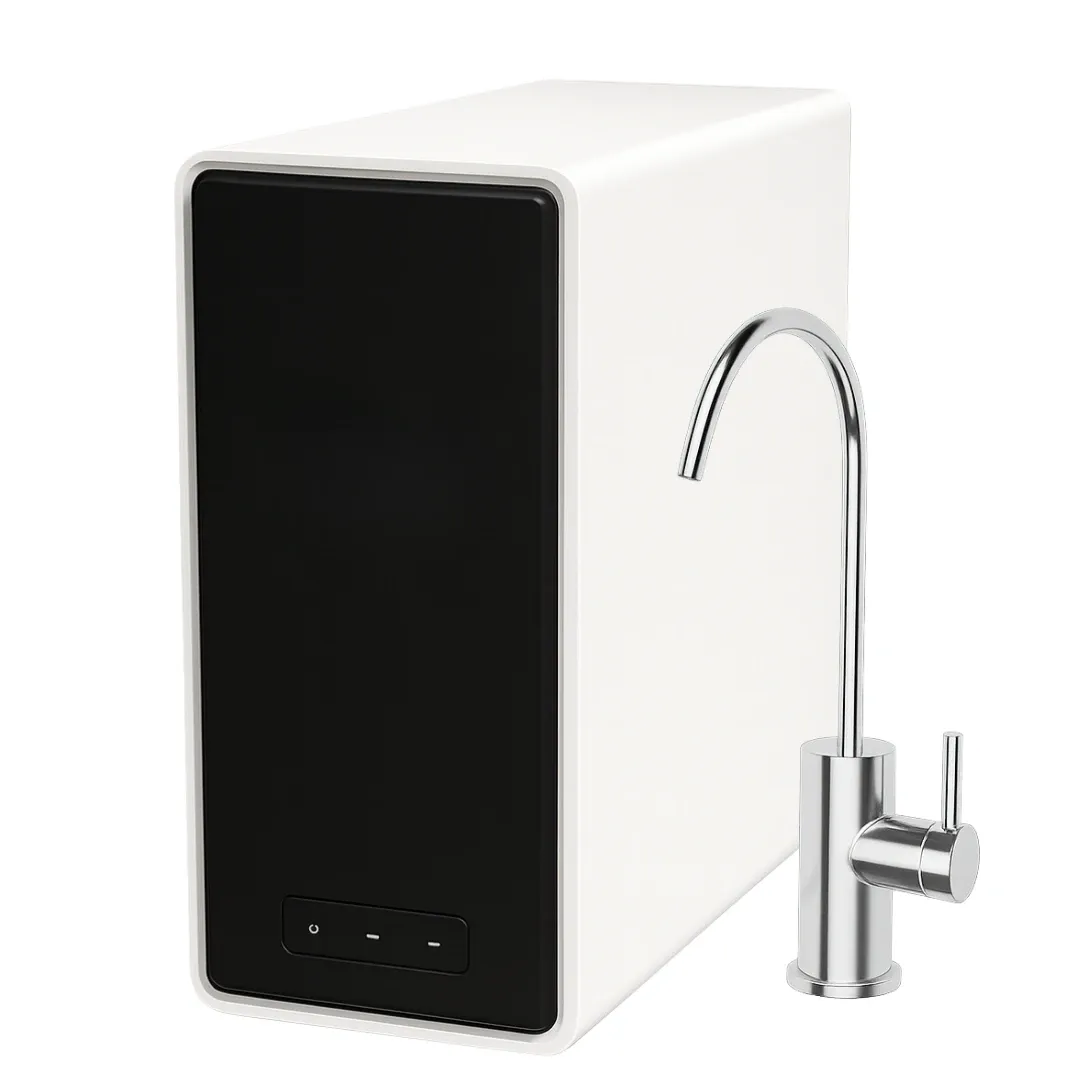
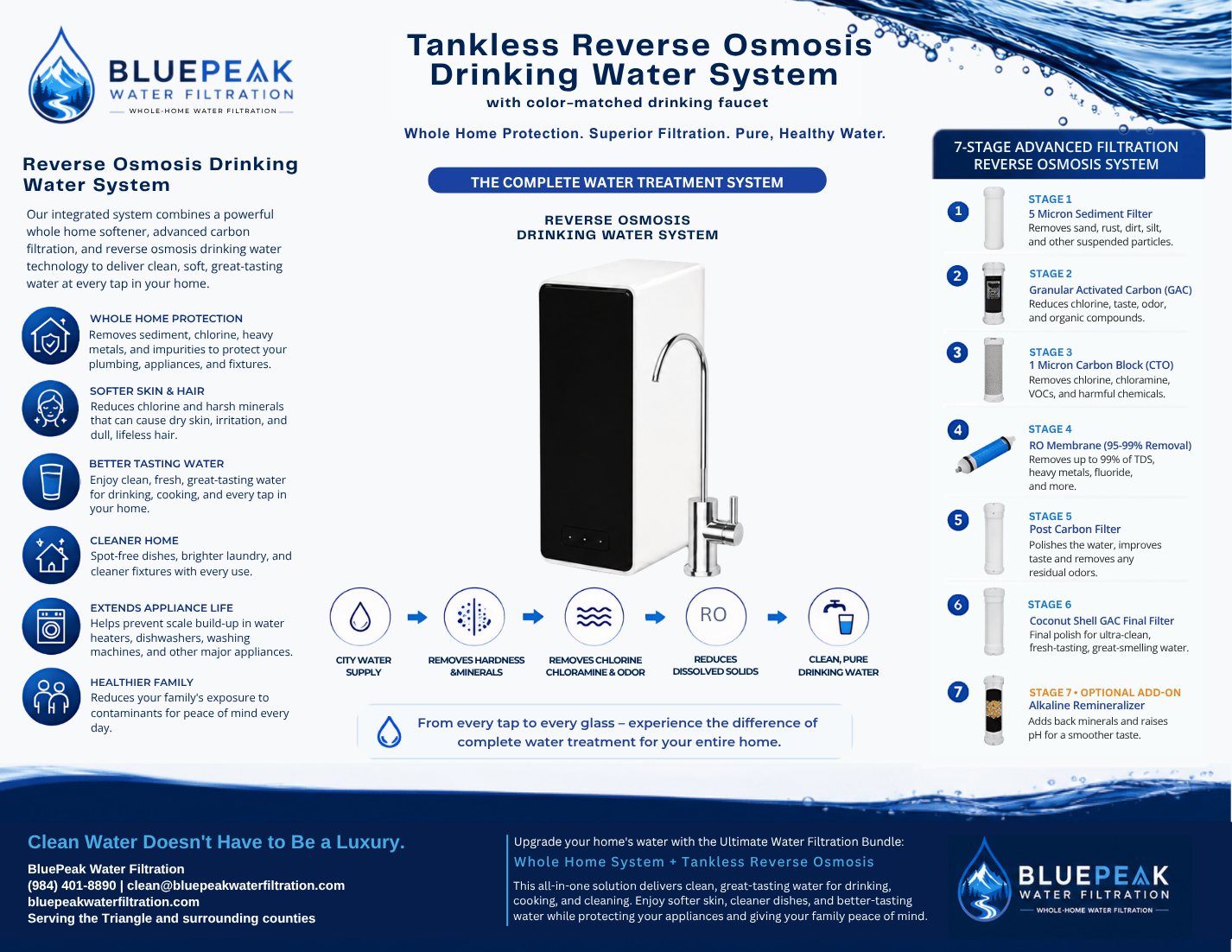
7-stage tankless reverse osmosis — 800 gallons per day, no storage tank. Alkaline remineralizer add-on available.
Regular price$1,537Sale price$999
Installed
35% off — ends September 30, 2026
Brochure — Reverse Osmosis — Tankless (7-Stage)Spec sheet — Reverse Osmosis — Tankless (7-Stage)
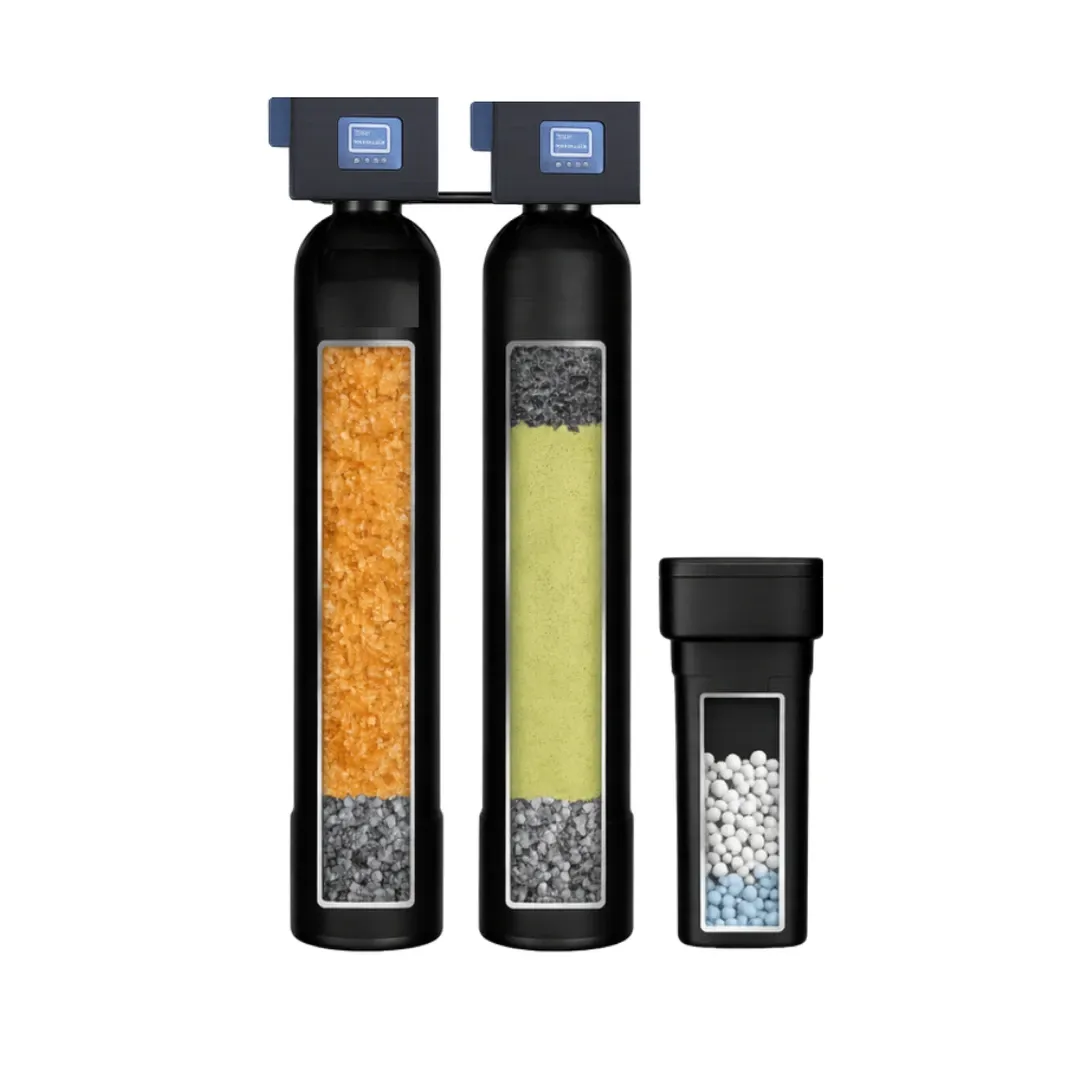
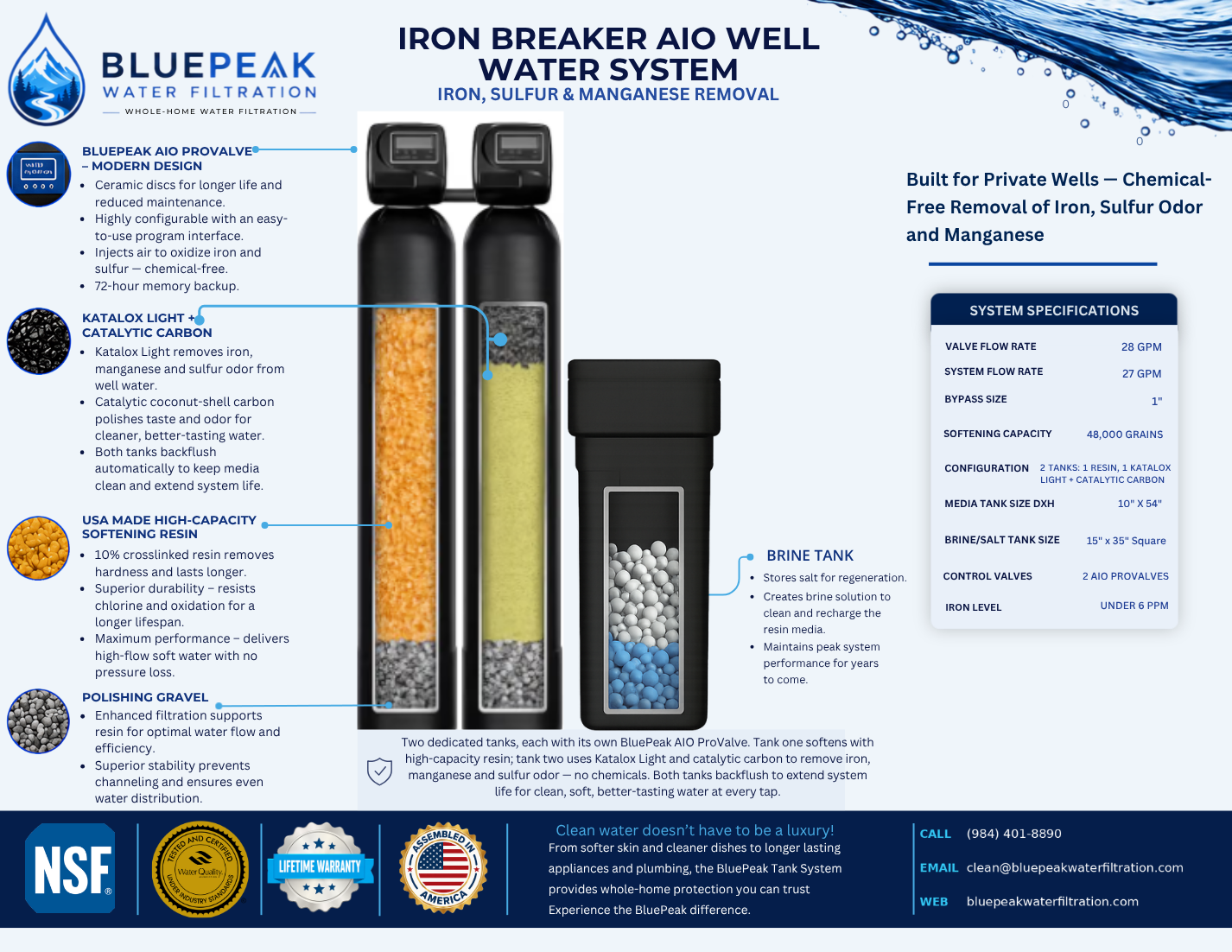
Chemical-free well-water system that clears iron, sulfur odor and hardness (iron under 6 ppm).
Regular price$6,146Sale price$3,995
Installed
35% off — ends September 30, 2026
Free reverse osmosis drinking system included
Brochure — Iron Breaker AIO (Dual Tank)Spec sheet — Iron Breaker AIO (Dual Tank)
All prices are for a garage or accessible waterline install. Crawl space, attic, outside or trenching installs add a $399 minimum, quoted on-site before any work begins.
Different jobs. A softener uses resin and salt to remove calcium and magnesium — the minerals that cause scale, spotting and that film on your skin. A filter uses carbon or specialty media to remove chlorine, taste, odor and other contaminants. Softening doesn’t clean your water; filtering doesn’t soften it. Most Triangle city homes need filtering more than softening. Well homes often need both, plus more.
Yes. We come to your home, test at your kitchen sink, and show you the results while we're standing there. No fee, no obligation, no PDF emailed to you three days later. It takes about fifteen minutes.
Yes, and it's a meaningful share of what we do. Wells in Wake, Harnett, Chatham and Johnston counties commonly come back with iron, hydrogen sulfide, sediment or low pH. Those need genuinely different equipment than a city water home — which is why we test first instead of quoting off a price list.
A properly sized system, no. An undersized one, yes — which is the most common installation mistake in this industry. Our systems are sized on service flow rate against your household’s peak demand. If someone quotes you a system without asking how many bathrooms you have, that’s a red flag.
Fifteen minutes at your kitchen sink, results while we are standing there, and no obligation. If your water is fine, we will tell you that.
Branden or someone on the team will call or text shortly to schedule your free water test. Need us sooner? Call or text (984) 401-8890.
Please try again in a moment, or call or text (984) 401-8890 and we will book your test by hand.