Chlorine taste and smell
The disinfectant that keeps the water safe across miles of pipe is still in your glass and your shower when it arrives. Carbon filtration removes it. This is the most common city water complaint we hear in Raleigh.
Raleigh is where our address is, and it is our largest market. It is not our boundary, and it is also not one water story. Two houses on opposite sides of the city can have completely different water and need completely different equipment.
Most of the city is on municipal surface water and gets the complaints surface water brings. Some outlying areas are served from groundwater instead, or from a private well, and those homes see something else entirely.
Most of Raleigh is on municipal supply drawn from surface water rather than groundwater, which is the ordinary arrangement across this region.
Surface water sources need heavier disinfection than groundwater does. That is the main reason tap water here so often carries a noticeable chlorine taste and smell, and it is the single most common reason people on city water call us.
The exception worth knowing about is groundwater. Where a home is served from a well, whether that is a small utility or your own, iron and manganese are common in Piedmont groundwater and are the usual cause of brown or orange tinted water and staining on laundry and fixtures. We confirm which situation your address is in during the test.
The disinfectant that keeps the water safe across miles of pipe is still in your glass and your shower when it arrives. Carbon filtration removes it. This is the most common city water complaint we hear in Raleigh.
If your supply is groundwater rather than a large municipal system, iron and manganese are the usual cause. They are aesthetic rather than regulated health contaminants, but they stain laundry and fixtures and they are treatable.
When chlorine meets natural organic matter in surface water it forms byproducts. They are regulated, monitored and reported in the annual Consumer Confidence Report your utility publishes. Carbon reduces them and reverse osmosis reduces them further.
Systems that suit Raleigh
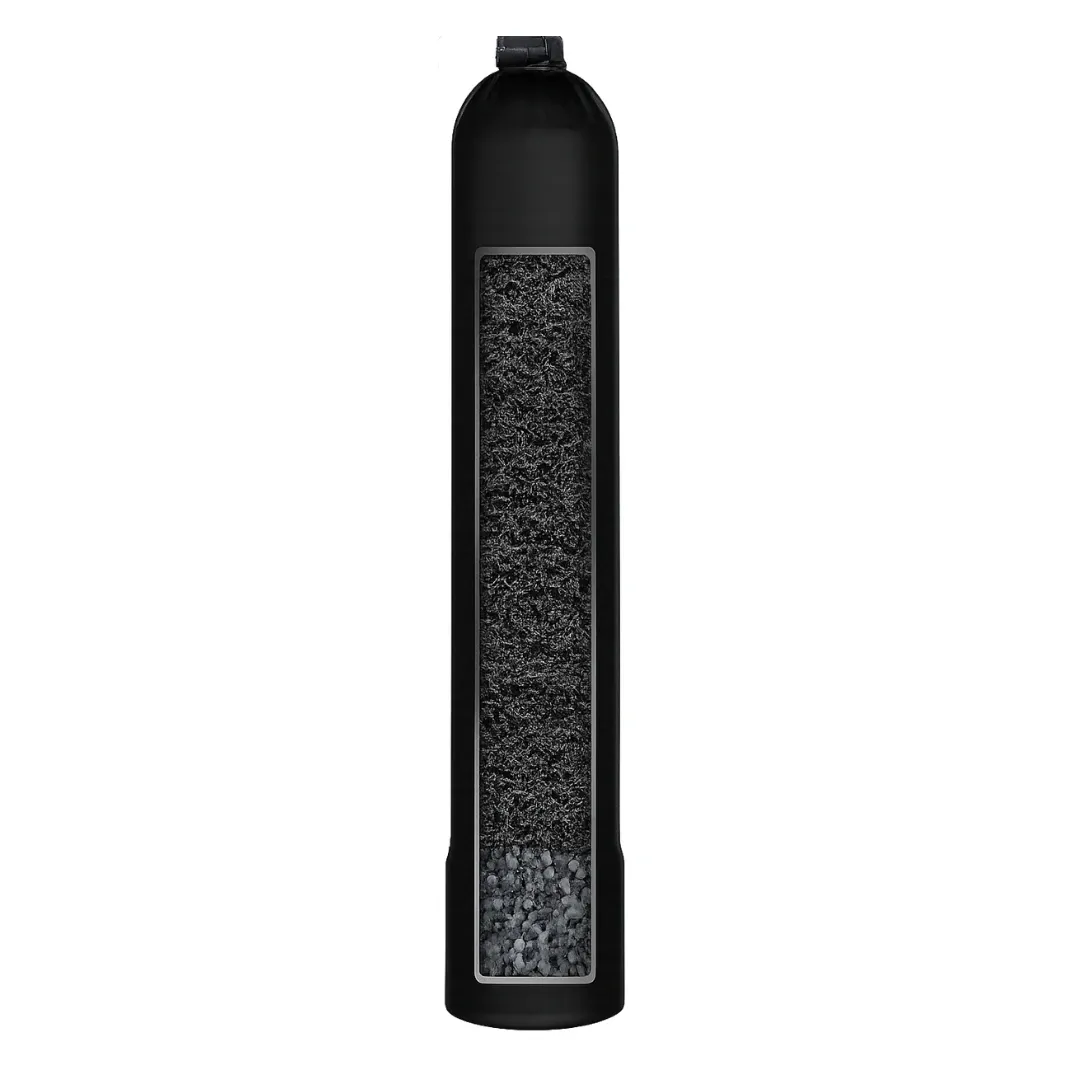
Removes chlorine, chloramine, taste and odor — no salt, no valve, no electricity. Does not soften.
Regular price$3,614Sale price$2,349
Installed
35% off — ends September 30, 2026
Free reverse osmosis drinking system included
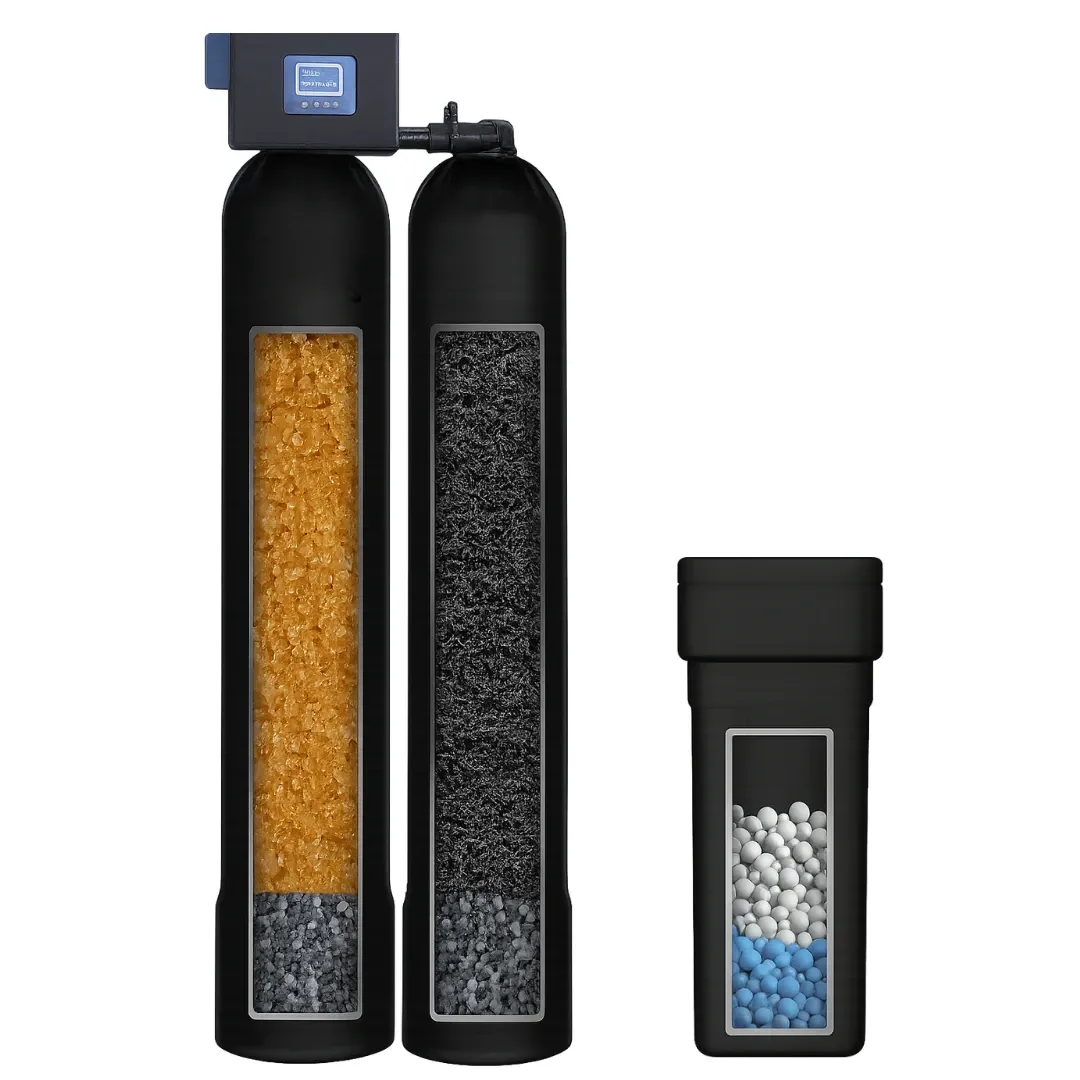
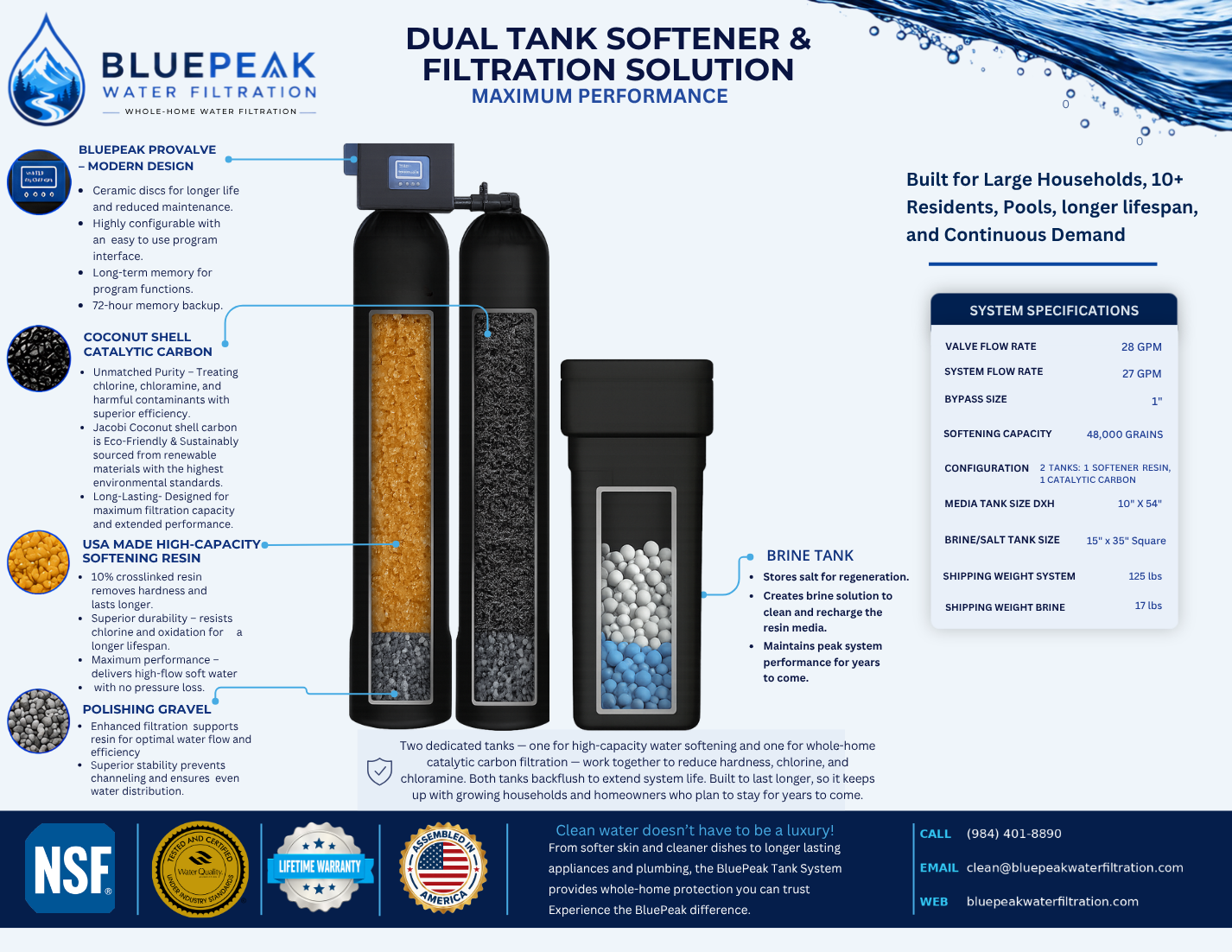
Dedicated softener tank plus a dedicated catalytic carbon tank for large homes and continuous demand.
Regular price$4,915Sale price$3,195
Installed
35% off — ends September 30, 2026
Free reverse osmosis drinking system included
Brochure — Dual Tank (Softener + Catalytic Carbon)Spec sheet — Dual Tank (Softener + Catalytic Carbon)
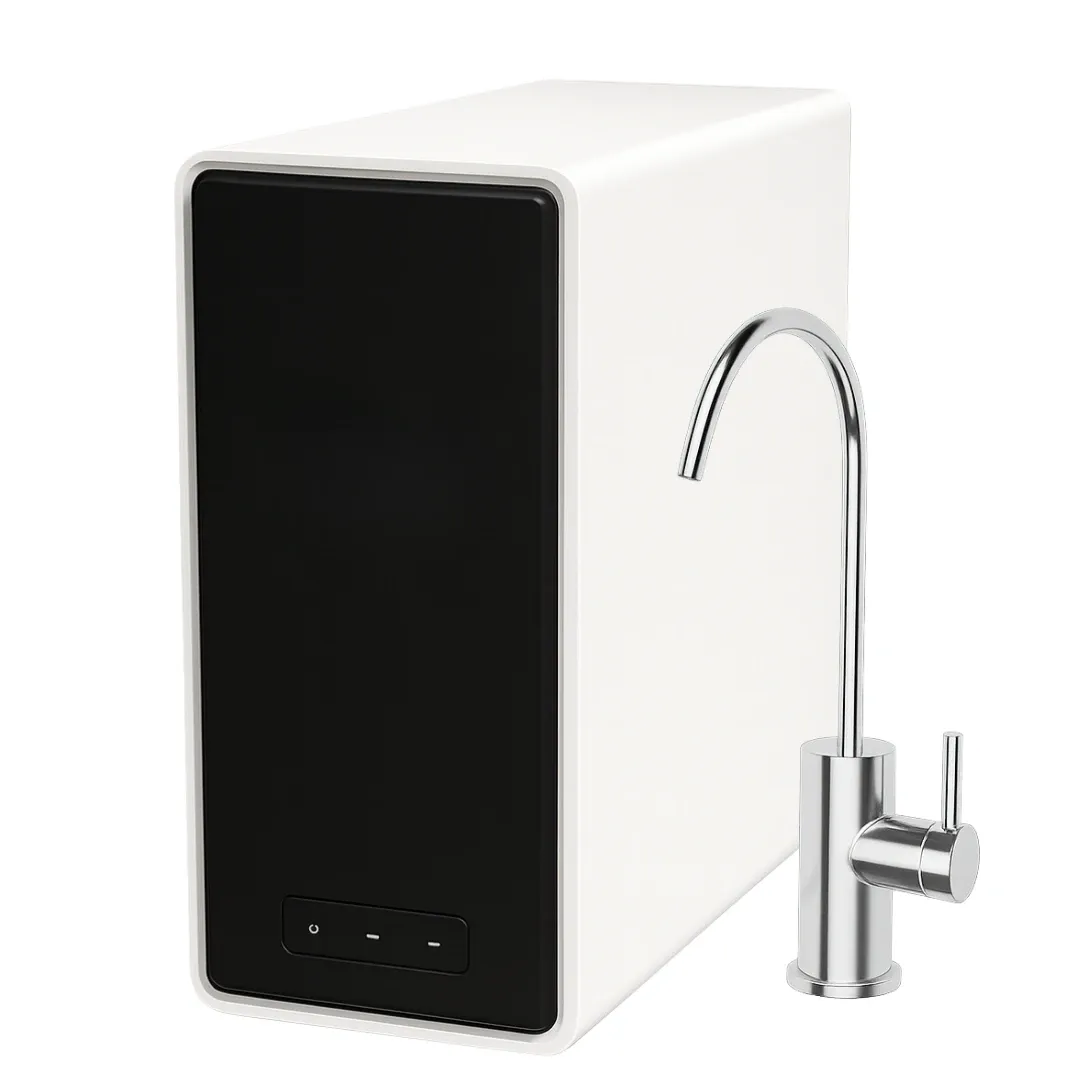
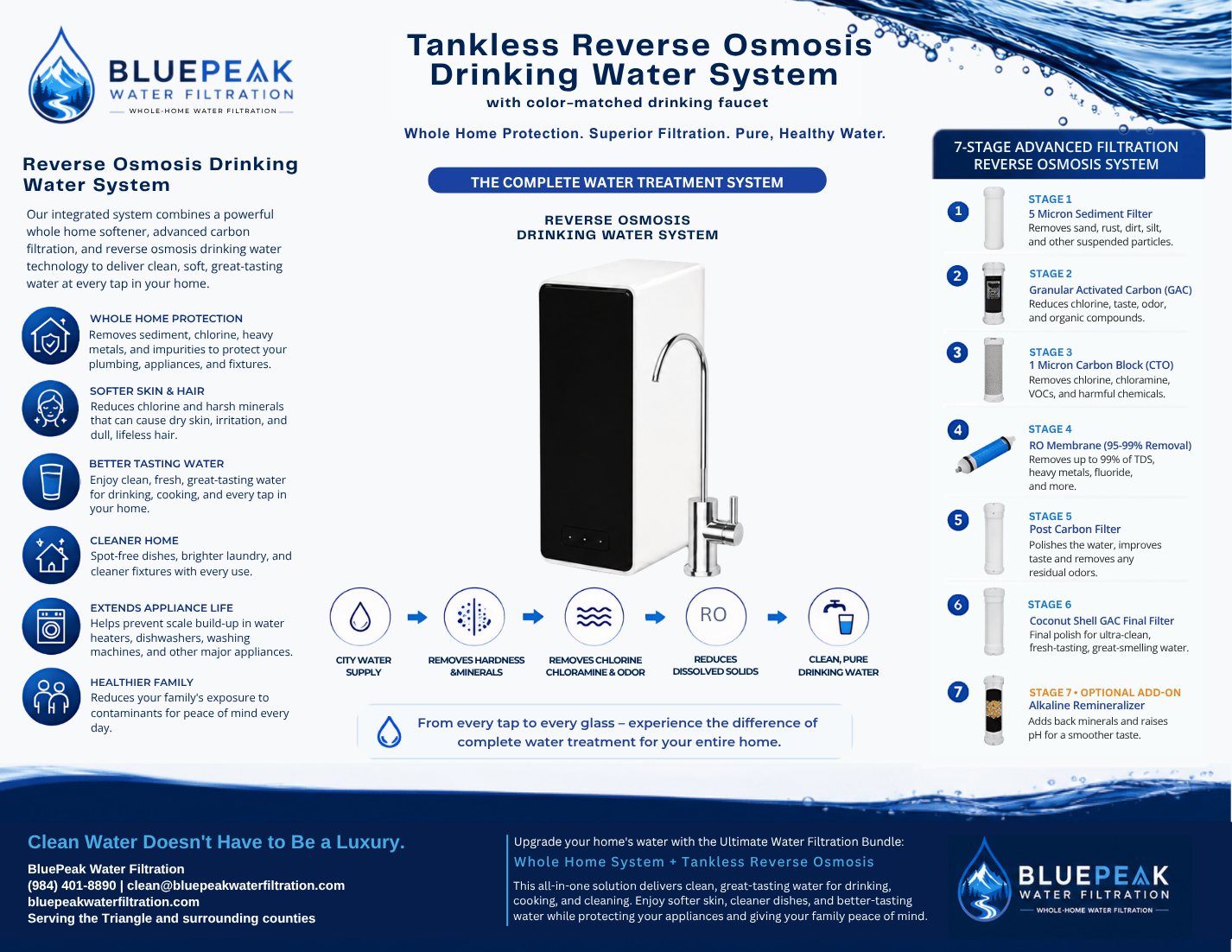
7-stage tankless reverse osmosis — 800 gallons per day, no storage tank. Alkaline remineralizer add-on available.
Regular price$1,537Sale price$999
Installed
35% off — ends September 30, 2026
Brochure — Reverse Osmosis — Tankless (7-Stage)Spec sheet — Reverse Osmosis — Tankless (7-Stage)
All prices are for a garage or accessible waterline install. Crawl space, attic, outside or trenching installs add a $399 minimum, quoted on-site before any work begins.
Legal and clean aren't the same standard. Municipal water in the Triangle meets every federal and state requirement, and the utilities do their job well. But the standards regulate a specific list of contaminants at specific levels — they don't cover taste, they don't cover chlorine byproducts, and they don't cover everything that's been found in Piedmont surface water over the last decade. Whether you need a system is a question about what's actually coming out of your tap and what bothers you. That's what the free test is for. If your water's fine, we'll tell you that.
Different jobs. A softener uses resin and salt to remove calcium and magnesium — the minerals that cause scale, spotting and that film on your skin. A filter uses carbon or specialty media to remove chlorine, taste, odor and other contaminants. Softening doesn’t clean your water; filtering doesn’t soften it. Most Triangle city homes need filtering more than softening. Well homes often need both, plus more.
A properly sized system, no. An undersized one, yes — which is the most common installation mistake in this industry. Our systems are sized on service flow rate against your household’s peak demand. If someone quotes you a system without asking how many bathrooms you have, that’s a red flag.
Yes. We come to your home, test at your kitchen sink, and show you the results while we're standing there. No fee, no obligation, no PDF emailed to you three days later. It takes about fifteen minutes.
Fifteen minutes at your kitchen sink, results while we are standing there, and no obligation. If your water is fine, we will tell you that.
Branden or someone on the team will call or text shortly to schedule your free water test. Need us sooner? Call or text (984) 401-8890.
Please try again in a moment, or call or text (984) 401-8890 and we will book your test by hand.