Hard water with no iron
If the test shows hardness and nothing else, a softener is the whole answer. Our Softener Only system removes hardness. It does not treat chlorine, iron or sulfur, and we will not pretend it does.
Sanford is the seat of Lee County, southwest of the Triangle, with town neighborhoods in the middle and well properties spreading out in every direction. On those wells, hardness is the first thing we look for.
You know the signs already: white scale on the shower door, spots on every glass, soap that will not lather, a water heater that pops and rumbles. What the signs cannot tell you is whether iron is mixed in with the hardness, and that one detail changes which system is right.
A free in-home water test settles it. Branden, the owner, runs it at your sink and shows you the hardness, iron and pH readings on the spot.
Hardness is dissolved calcium and magnesium. Groundwater collects it on the way to your well, and the amount differs from one property to the next, so a reading from down the road tells you little about yours.
Iron is the common companion. Iron and manganese occur widely in Piedmont groundwater, and even a modest amount leaves orange or brown marks on fixtures and laundry. A softener is not designed for that job, which is why the iron reading matters before anyone recommends one.
Homes inside Sanford on municipal water have a separate, smaller question. Treated water carries chlorine to your tap, some people dislike the taste and smell, and carbon filtration removes it.
We confirm your supplier and your source water during the free test rather than assuming it from your address.
If the test shows hardness and nothing else, a softener is the whole answer. Our Softener Only system removes hardness. It does not treat chlorine, iron or sulfur, and we will not pretend it does.
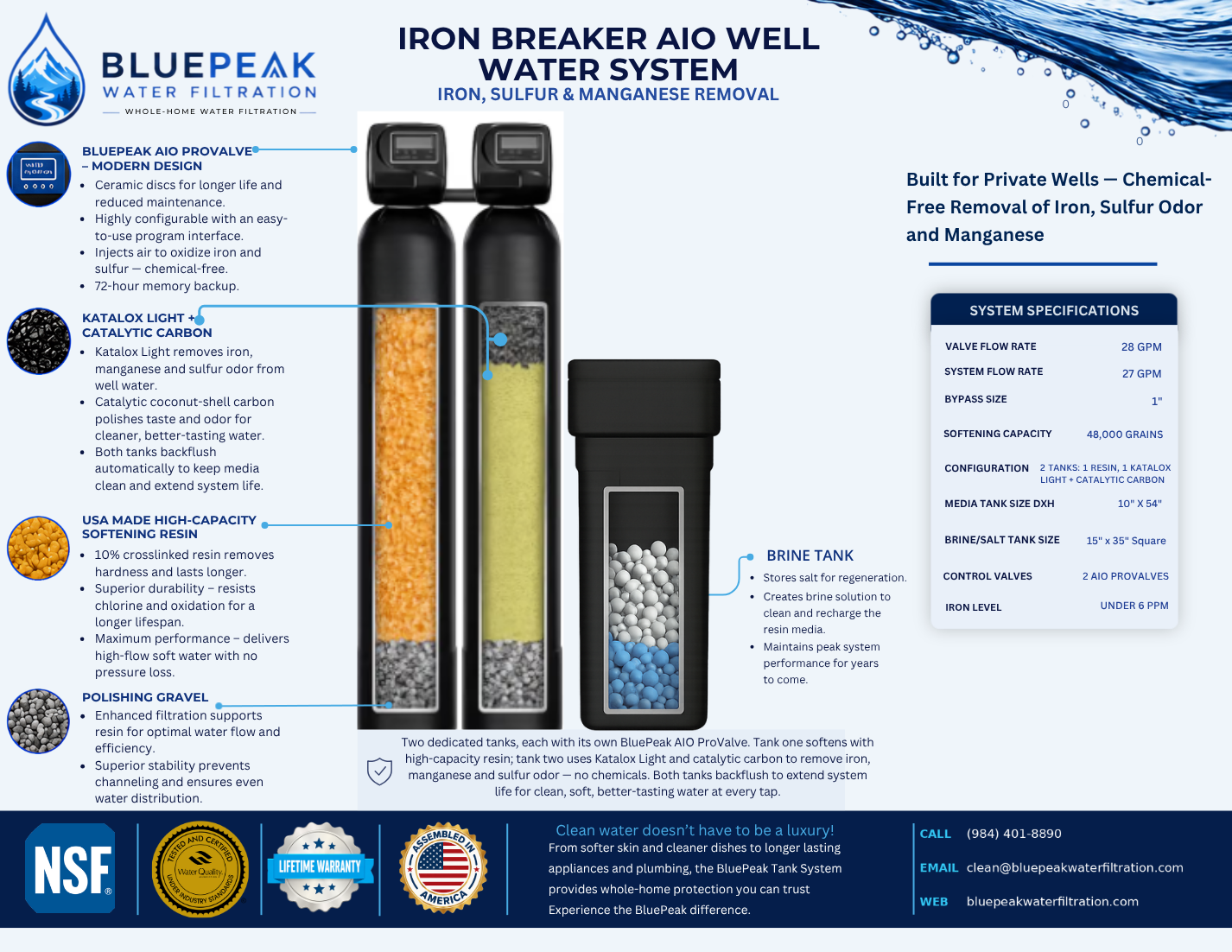
This is where people end up with the wrong equipment. The Iron Breaker AIO handles iron under 6 ppm with air injection and includes a softening tank, so one system covers both problems instead of a softener struggling with a job it was not built for.
A salt-free conditioner helps keep scale from sticking. It does not soften water, and the mineral reading is the same after it as before it. For some homes that is enough. For genuinely hard well water it usually is not, and we will say so.
In-town homes that want the chlorine gone get a whole-home carbon filter. If scale also bothers you, ask for the grain reading first and decide on softening from the number.
Systems that suit Sanford
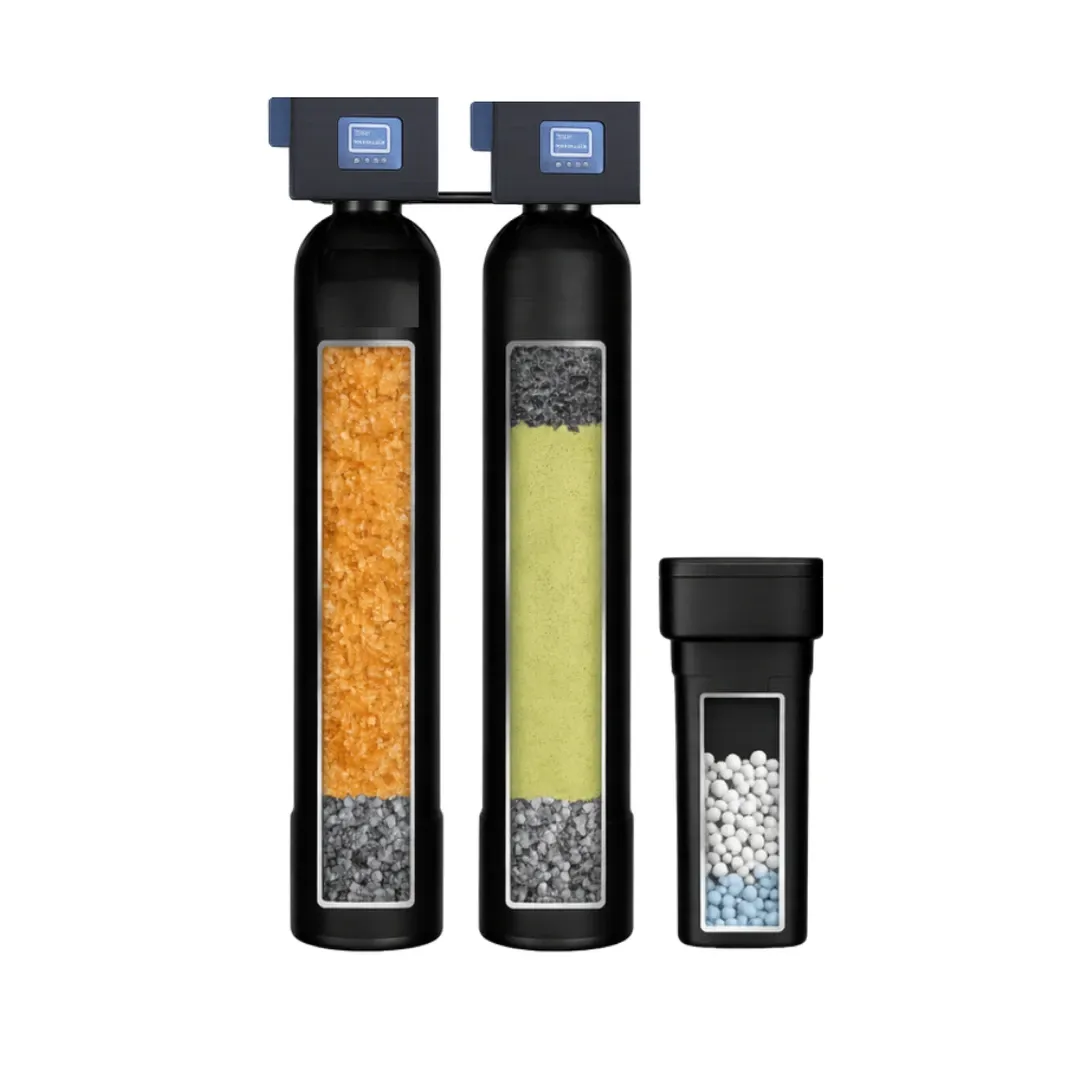
Chemical-free well-water system that clears iron, sulfur odor and hardness (iron under 6 ppm).
Regular price$6,146Sale price$3,995
Installed
35% off — ends September 30, 2026
Free reverse osmosis drinking system included
Brochure — Iron Breaker AIO (Dual Tank)Spec sheet — Iron Breaker AIO (Dual Tank)
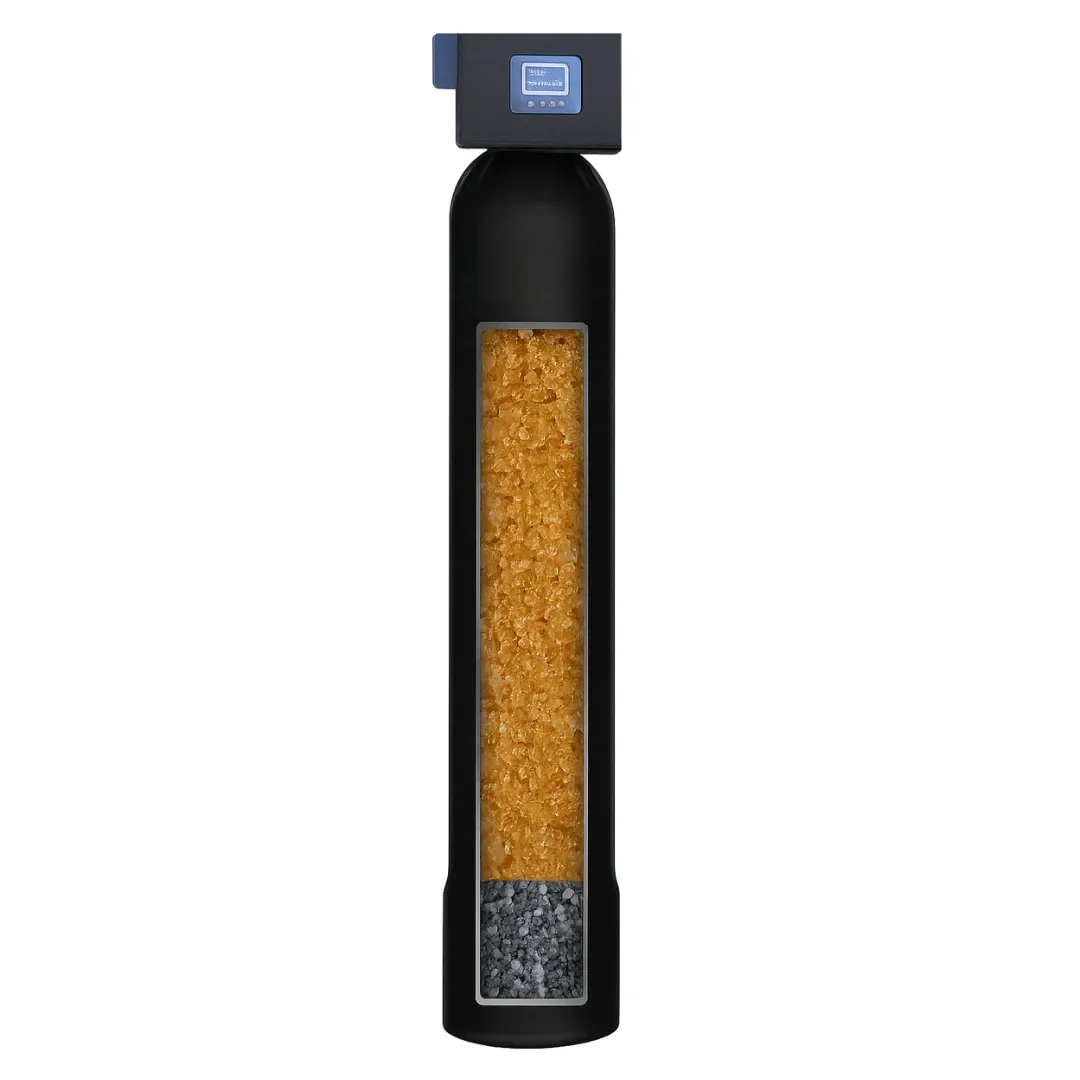
Straight water softener — 48,000 grains, no carbon. Stops scale, spots and dry skin.
Regular price$3,922Sale price$2,549
Installed
35% off — ends September 30, 2026
Free reverse osmosis drinking system included
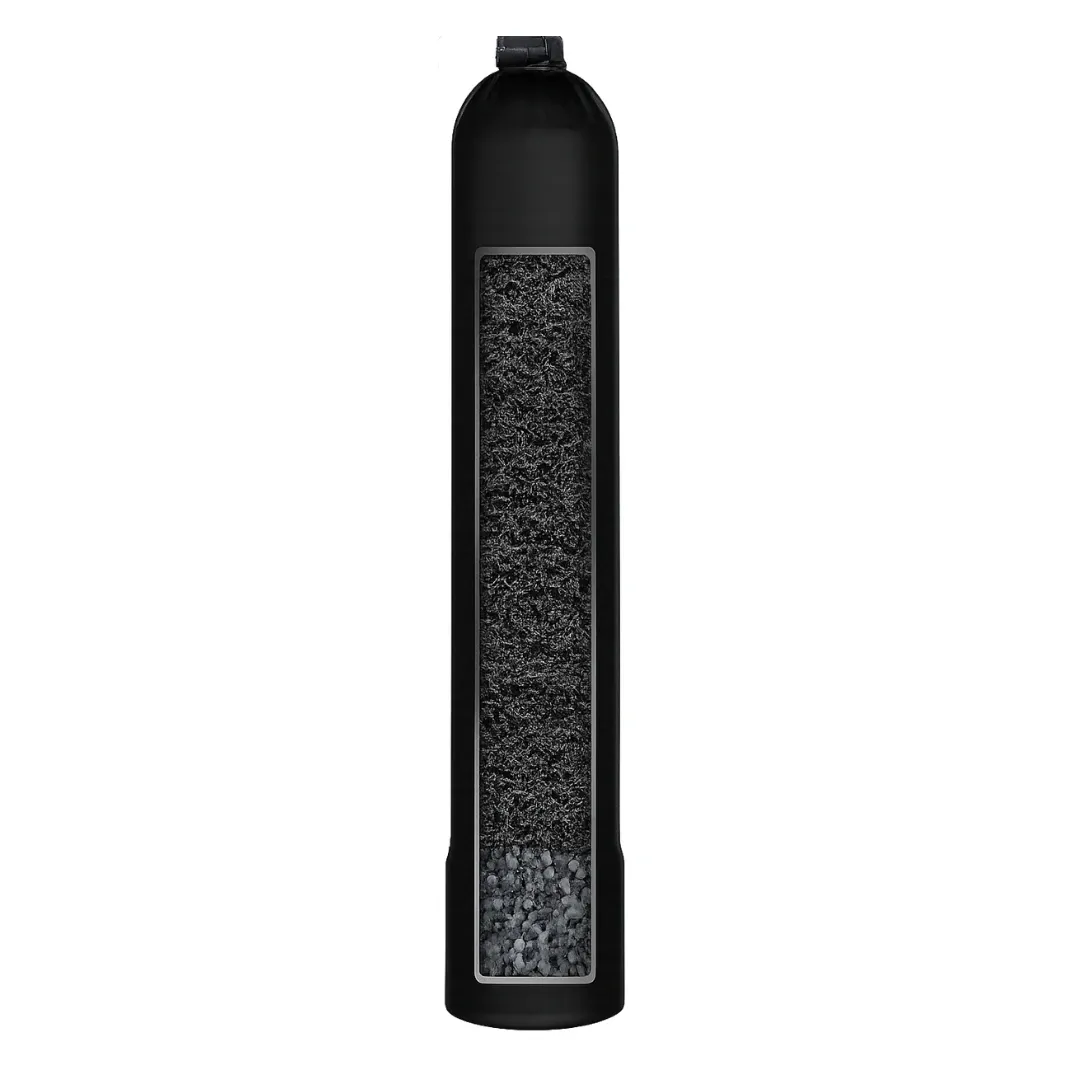
Removes chlorine, chloramine, taste and odor — no salt, no valve, no electricity. Does not soften.
Regular price$3,614Sale price$2,349
Installed
35% off — ends September 30, 2026
Free reverse osmosis drinking system included
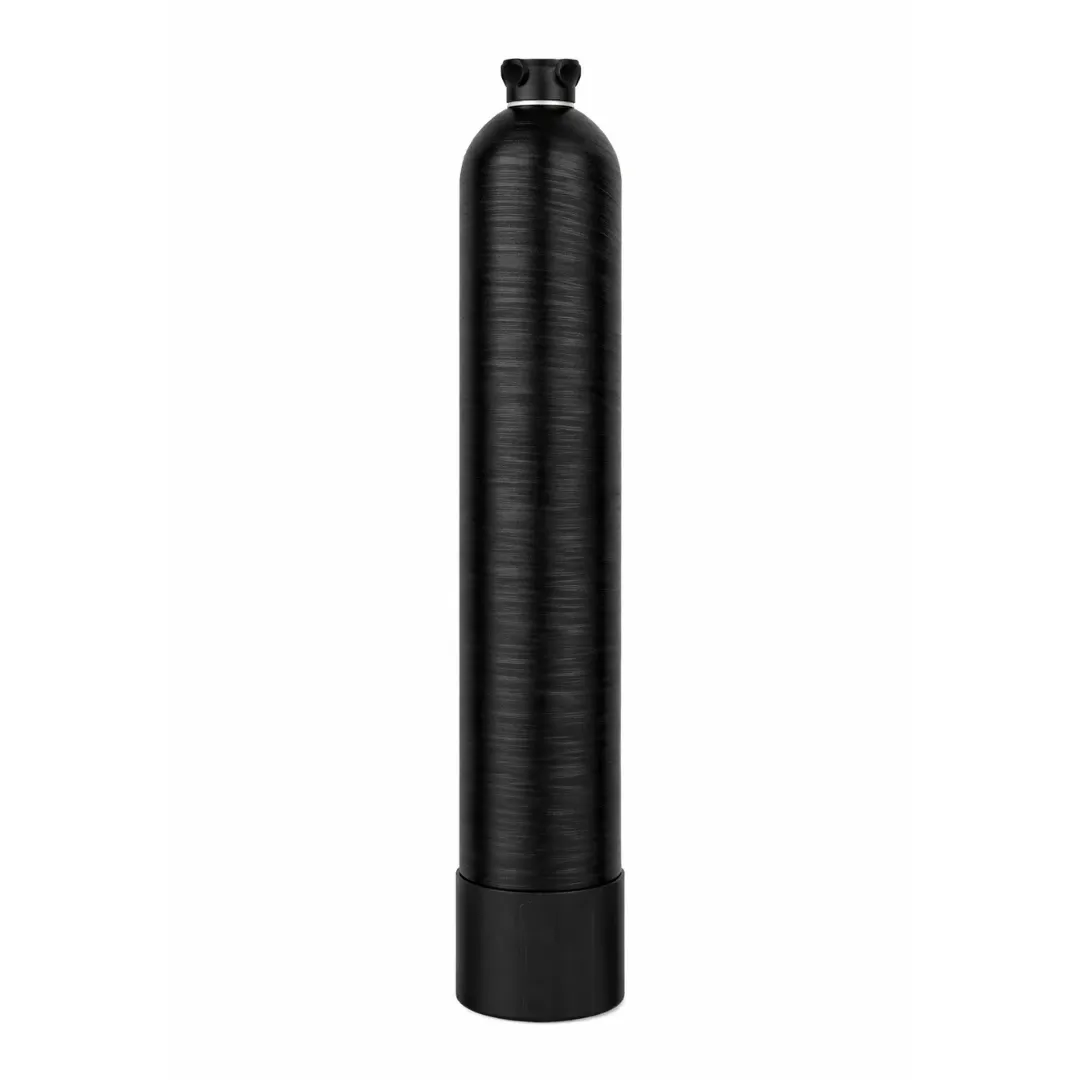
Conditions hard water to reduce scale with no salt, drain or power. Does not soften.
Regular price$4,383Sale price$2,849
Installed
35% off — ends September 30, 2026
Free reverse osmosis drinking system included
All prices are for a garage or accessible waterline install. Crawl space, attic, outside or trenching installs add a $399 minimum, quoted on-site before any work begins.
Different jobs. A softener uses resin and salt to remove calcium and magnesium — the minerals that cause scale, spotting and that film on your skin. A filter uses carbon or specialty media to remove chlorine, taste, odor and other contaminants. Softening doesn’t clean your water; filtering doesn’t soften it. Most Triangle city homes need filtering more than softening. Well homes often need both, plus more.
A salt-free conditioner doesn’t remove hardness minerals — it changes their structure so they’re less likely to stick and form scale. It’s a real technology with real limits. What you get: less scale buildup, no salt to haul, no discharge. What you don’t get: the slick soft-water feel, better lathering, or any reduction in the actual mineral content. If someone tells you salt-free is a softener, they’re overselling it. It’s the right call for some homes and the wrong call for others.
For a typical Triangle household on a properly sized softener, figure on a bag every two to three months. It depends on your hardness level and how much water you use. If you’re going through salt much faster than that, something is set wrong.
Yes, and it's a meaningful share of what we do. Wells in Wake, Harnett, Chatham and Johnston counties commonly come back with iron, hydrogen sulfide, sediment or low pH. Those need genuinely different equipment than a city water home — which is why we test first instead of quoting off a price list.
Fifteen minutes at your kitchen sink, results while we are standing there, and no obligation. If your water is fine, we will tell you that.
Branden or someone on the team will call or text shortly to schedule your free water test. Need us sooner? Call or text (984) 401-8890.
Please try again in a moment, or call or text (984) 401-8890 and we will book your test by hand.